
Enterprise · Integration
Integrating generative AI into
existing systems
A workflow that only runs on one person's computer is a prototype. A workflow that accepts jobs, has results reviewed and files them where your team works is part of your processes. We build that transition.
Where integration starts
Which interfaces exist we clarify in a requirements workshop. We do not assume a standard integration. We build the connection for your system.
DAM
Results land with metadata, version and AI labelling directly in the media management.
PIM
Product data serves as input, finished images are assigned to the item.
CMS and shop
Approved assets and variants reach publishing without a manual upload.
Internal tools and approval
Review and feedback happen in the tools the team already uses.
APIs and webhooks
Triggers and feedback run through interfaces, not through manual file exchange.
Automations
Several steps are orchestrated as one process with clearly defined handovers.
Building a content pipeline
The process differs from project to project. At its core it looks like this.
01 Job
A form, a product record or a webhook starts the run.
02 Generation
A versioned workflow produces the results, for example with open-weight models and trained models for consistent characters.
03 Automatic checks
Format, size, required fields and technical quality are checked before anyone looks at it.
04 Human approval
The responsible people review and approve, or request a new variant.
05 Filing and labelling
The result is stored in the target system with metadata and AI labelling.
06 Publishing
The asset is ready for channels, shop or campaign.
Roles, approvals and human in the loop
Generated results need a defined review point. Together with you we decide who may start jobs, who approves results and which cases need a second check. The roles are built into the system, not just written in a document.
What can be automated reliably runs automatically. Anything that concerns brand, legal matters or customers goes through human approval.
- Roles for ordering, review and administration
- Approval levels by content type or risk
- Traceable versions and decisions
An interface for specialists
The workflows behind it can be complex. Your staff should still be able to use them without special knowledge. That is why we make the workflows available through a user-friendly enterprise platform, with clearly defined interfaces, roles and access rights. Behind it, workflows, models and, where relevant, digital twins do the work.
An implemented example is the enterprise platform for generative image and video AI: staff work through a defined interface while models, workflows, access rights and data processing are controlled centrally.
Scaling and operation
Once several departments use the workflows, load, cost and maintenance start to matter. Jobs are processed in a controlled way, data processing and resources can be kept under control, and changes to workflows are versioned and tested before they go live.
Handover includes documentation and training. We shape operations together with your IT.
Our service for this
We deliver the topics on this page in the following service areas.
03 Workflow Integration
We integrate custom AI workflows into your existing systems and processes, so that generative AI can be used directly in your company.
Learn more04 AI Agent Engineering
We develop custom AI agents that automate recurring processes, research information, process data and integrate into existing systems.
Learn more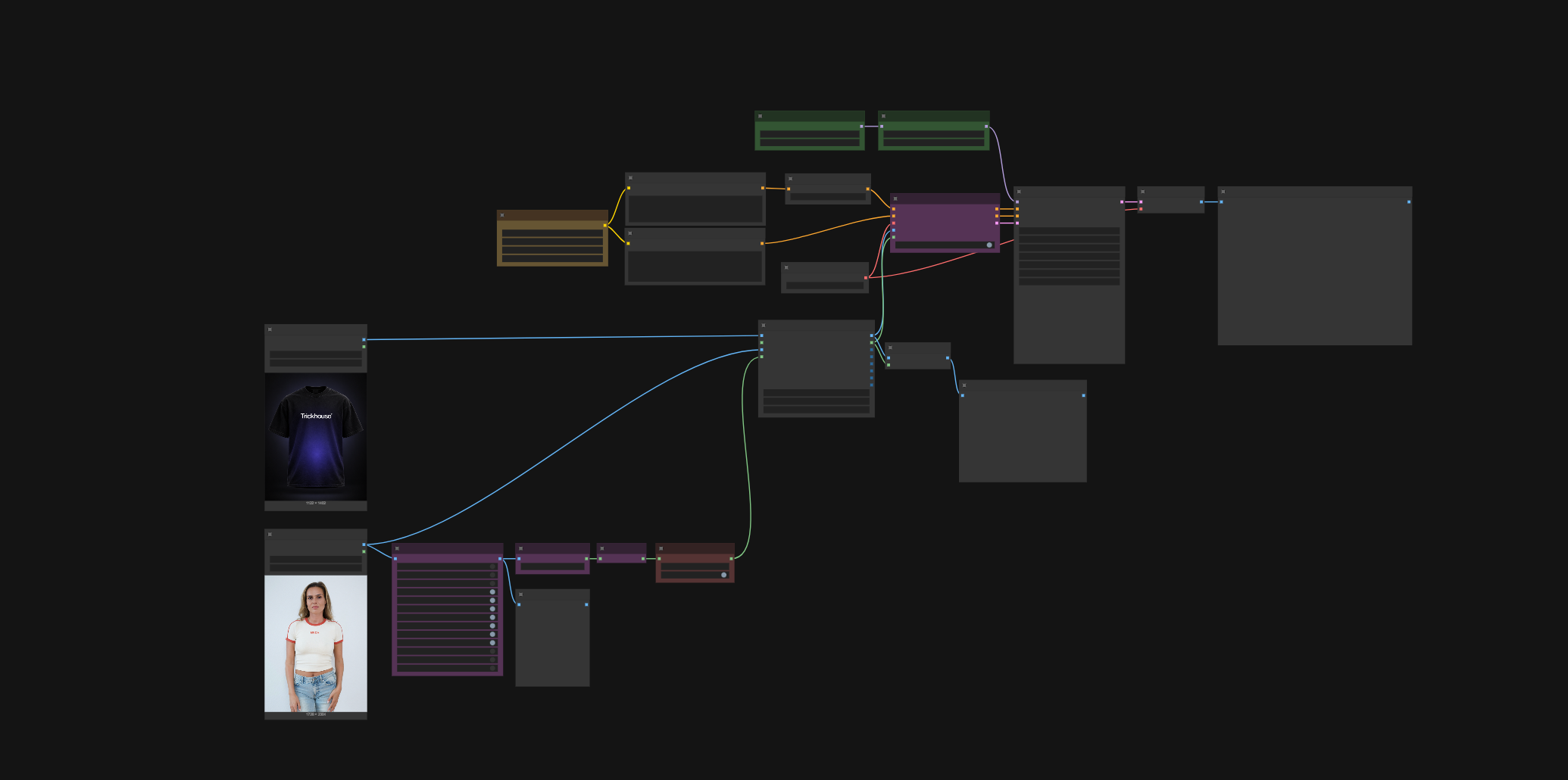
Frequently asked questions
Which systems can be connected?
In principle any system that offers an interface: an API, webhooks or a defined file drop. Typical examples are DAM, PIM, CMS, shops and internal platforms. What is possible in your case we check in a requirements workshop.
Does our team need to operate the workflows itself?
No. The workflows run in the background and your staff work through a simple interface. We train separately whoever is to maintain the workflows.
How does quality stay stable?
Workflows are versioned and have quality gates. Changes are tested before they go live, and results pass through a defined approval.
Who runs the solution?
We decide that together in the project. Operation together with your IT is the usual setup. The infrastructure is your own or a suitable EU cloud.
What does an integration project look like?
Four steps: requirements workshop, architecture and prototype, workflow development, then rollout with training and operation. More on the approach is on the Workflow integration page.
Related topics
Workflow integration
Our service area: custom workflows, infrastructure, connection.
Learn moreData-sovereign generative AI
Operating models and control over data compared.
Learn moreEnterprise image generation
Brand consistency, approvals and scale for images.
Learn moreAI agents for business
When systems do not just generate but take on tasks.
Learn more
Ready for your next project?
Tell us briefly what you want to achieve with generative AI. We advise you on content production, digital twins, AI workflows and integration, and get back to you within 24 hours with an initial assessment.