
Enterprise · Generative AI
Putting generative AI
to work in your company
Generative AI helps a company where it fits a concrete process: an image and video workflow, a research task, a recurring job in a business system. This page explains where it works today, what it takes and what a sensible start looks like.
What generative AI means in a company
Generative models turn an input into new content: images, videos, text or structured suggestions. In a company the benefit rarely comes from the model alone. What matters is the framework around it: which data may go in, who reviews results, where they end up and what a run costs.
The difference between an experiment in the browser and use in daily operations lies in exactly that framework. We work on both ends: we produce content ourselves and we build the systems in which your team produces it.
- A concrete process instead of a general tool rollout
- Defined approvals and responsibilities
- Connection to the systems your team already works in
Typical areas of use
Which areas pay off depends on your business. These five come up most often.
Image and video
Campaigns, product images, variants and motion content, including digital twins and synthetic models. More under Content production.
Internal workflows
Recurring processes such as preparing, varying and localising content, run as tested workflows instead of one-off manual work.
AI agents
Systems that research, prepare data and set up tasks in business systems. An overview is in AI agents for business.
Documents and knowledge
Classify incoming documents, extract the relevant details and make internal knowledge searchable.
Training and standards
Prompting and quality standards, approval processes and training so teams use the tools safely. See Consulting.
From pilot to production
A pilot proves little if it runs outside the real process. That is why we work in this order.
01 Choose a use case
One process, one concrete question, one measurable goal. Not five ideas at once.
02 Pilot with real data
A small, well-defined scope, agreed success criteria and tests with material from the running business.
03 Set standards and approvals
Who checks what, which quality limits apply, and how results are labelled and documented.
04 Integration and rollout
Connection to the existing systems, training for the teams, gradual expansion.
05 Operation and further development
Monitoring, cost control and regular adjustment, because models and requirements keep changing.
Data, governance and legal questions
With generative AI, data flows and responsibilities are part of the design. That includes which data a model may see, where processing takes place, who has access to inputs and results, and how content is labelled, for example under the EU AI Act.
The available operating models and how to assess them are described under Data-sovereign generative AI. This does not replace a legal assessment, which belongs with your data protection and legal advisers. We make sure the technical implementation can reflect the requirements.
Integration instead of isolated tools
A tool that sits next to your existing systems is rarely used for long. Results have to arrive with their metadata where they are needed, for example in the DAM, the PIM or the CMS, and jobs must be startable from the processes you already have.
What this looks like is described under Integrating generative AI into existing systems.
The role of Trickhouse
Trickhouse is a generative AI agency in Düsseldorf. We produce content with digital twins and AI models, build workflows and agents, connect them to your systems and train your teams. We prefer open-source software and open-weight models because they keep control over models, data and processes with you.
- Production, engineering and consulting from one team
- Operation on your own or rented GPU infrastructure, on premises or in European cloud environments
- Introduced together with your team instead of handing over a finished package
Our service for this
We deliver the topics on this page in the following service areas.
02 Consulting
We train your teams on the AI applications you actually need in the company, and support you in implementing the relevant requirements of the EU AI Act safely.
Learn more03 Workflow Integration
We integrate custom AI workflows into your existing systems and processes, so that generative AI can be used directly in your company.
Learn more04 AI Agent Engineering
We develop custom AI agents that automate recurring processes, research information, process data and integrate into existing systems.
Learn more01 Content Production
Images and videos with digital twins of real people and synthetic AI models. Consistent across multiple scenes.
Learn more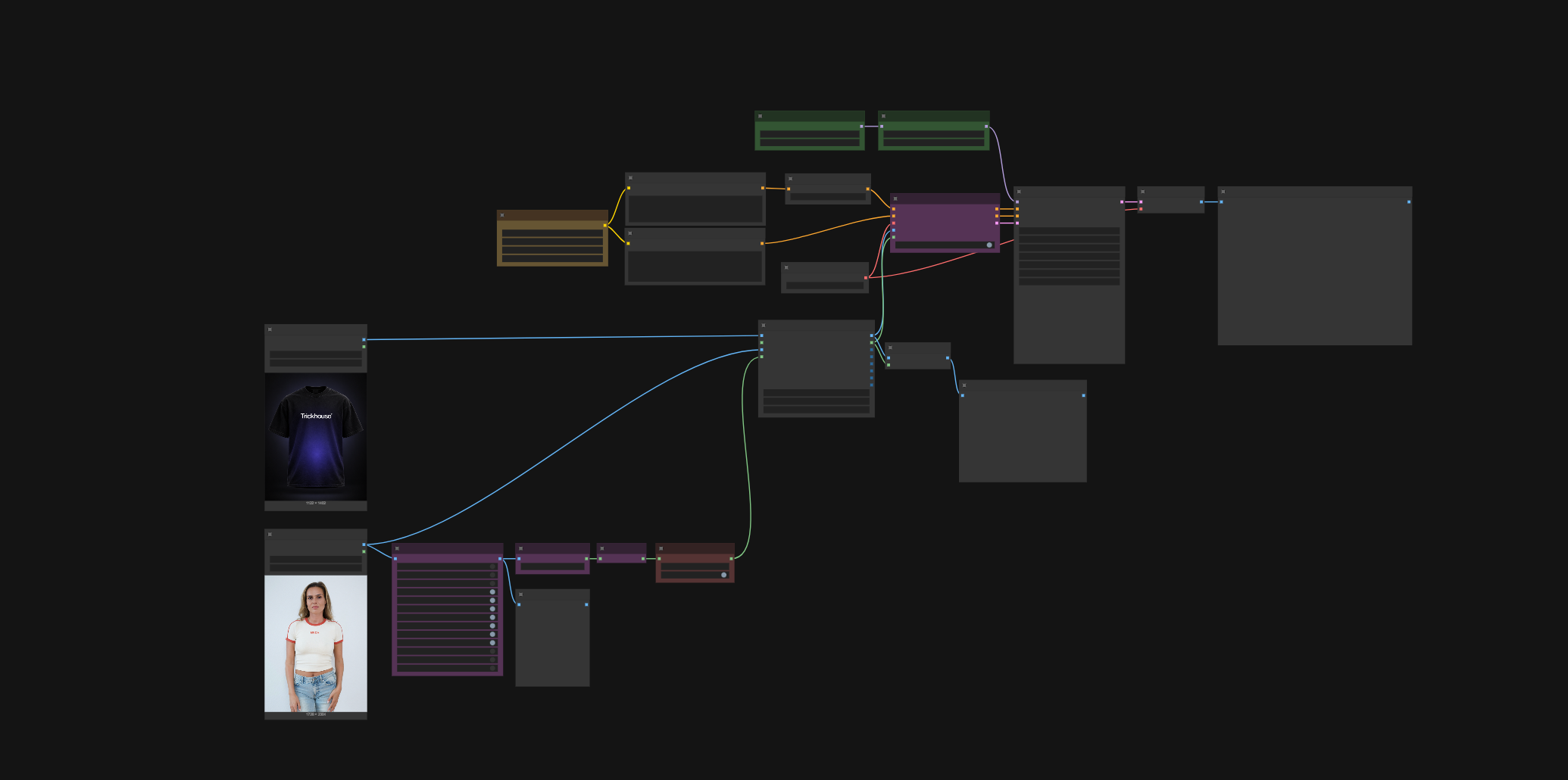
Frequently asked questions
Where do you start with generative AI in a company?
With a process, not a tool. A good starting point is a use case that comes up regularly, whose effort is known today and whose result is easy to check. In the intro call we work out together which process qualifies.
Do we need our own infrastructure for this?
Not necessarily. Whether external services, rented GPU infrastructure in Europe or your own hardware make sense depends on the kind of data, the volume and your requirements. We compare the options under Data-sovereign generative AI.
How long does a pilot project take?
That depends on the use case and the systems involved. We keep pilots deliberately small and well-defined so the result can be assessed quickly. We agree scope and timeline together after the intro call.
What data does a pilot need?
Material from the real process, for example product images, documents or sample cases. Which data that is in your case, and how it is processed securely, we clarify before the start.
Can existing systems be connected?
In principle yes, provided they offer an interface such as an API, webhooks or a defined file drop. Which connection is possible in your case we check in a requirements workshop.
Related topics
Data-sovereign generative AI
Operating models, model choice and control over data compared.
Learn moreAI agents for business
Chatbot, workflow or agent: use, control and limits.
Learn moreIntegrating generative AI into existing systems
DAM, PIM, CMS and internal tools as part of the workflow.
Learn moreConsulting and training
Assess use cases, set standards, train teams.
Learn more
Ready for your next project?
Tell us briefly what you want to achieve with generative AI. We advise you on content production, digital twins, AI workflows and integration, and get back to you within 24 hours with an initial assessment.